75% OFF - SHORT TIME ONLY

DE

Ein Beitrag von

Annika Felbermayer

Portraitfoto von Annika Felbermayer
Mehr über die Autorin ↓

Warum genau dieses Thema?

Während meiner Recherche über Comic Sans stieß ich auf das Phänomen „Type Hate“ – den Hass auf bestimmte Schriftarten. Dabei entdeckte ich eine völlig neue Seite der Typografie. Mich faszinierte besonders, dass nicht nur Comic Sans auf starke Ablehnung stößt, sondern dass viele weitere Schriftarten ähnliche Reaktionen hervorrufen. Schnell wurde mir klar, dass hinter diesem Phänomen mehr steckt als bloße Geschmacksfragen. Woher dieser Hass kommt und welche Ursachen dahinterstehen, erfahren Sie in meinem Artikel.

Fun Fact über dich?

Beim Arbeiten und Recherchieren höre ich gerne klassische Musik, um im Flow zu bleiben. Dabei fühlt es sich oft so an, als würde ich meine eigenen Designs komponieren.

Wie findet man dich online?

www.nika-design.at

Comic Sans:

A toxic relationship

What if I told you that a simple typeface could inspire the kind of visceral hatred usually reserved for nails on a chalkboard?

A woman is screaming while her head is wrapped in plastic foil.
© Pexels | Engin Akyurt

For many graphic designers, Comic Sans triggers exactly that reaction—a phenomenon known as „type hate“ that has persisted since the late 1990s. But before we dive into the passionate emotions this font provokes, let‘s investigate how Comic Sans came to be.

History & Birth

We can thank Vincent Connare, a typographer working for Microsoft in the mid-1990s, for creating what would become the most controversial font in digital history. Connare was in charge of typography for Microsoft Bob, a program designed to make computers more accessible to children. The interface featured a friendly cartoon dog that communicated with users via text bubbles, and when Connare saw it, he immediately noticed a problem: the dog was speaking in Times New Roman. This small, cute dog had a font known for its seriousness and formal tone. „A cartoon dog who spoke like a wise master?! It didn‘t work,“ Connare later recalled.


He needed to create something that matched the playful spirit of the program. Drawing inspiration from comic books like Watchmen and The Dark Knight Returns—where text was handwritten by specialized calligraphers—Connare set out to reinterpret that style digitally. He drew each letter with a mouse, deliberately breaking the rules. „I didn‘t have to make straight lines, I didn‘t have to      make everything seem right, and that‘s what I found fun. I was breaking every rule of typography,“ he said.


The discourse against Comic Sans breaks
down into three main arguments:
Usage, Aesthetic, and Sociological.

Everything was improvised, every classic typography rule deliberately ignored. Ironically, Comic Sans was completed too late for Microsoft Bob. But the font soon found a second life when it was included in the Windows 95 package, becoming a system font distributed with Microsoft software including Publisher and Internet Explorer.


And just like that, the era of Comic Sans began. Everyone with Windows 95 suddenly had access to this friendly, informal typeface. People loved it. Secretaries used it for company emails. Teachers used it for classroom worksheets. Parents used it for birthday invitations. Its accessibility made it wildly popular among non-designers, leading to its massive diffusion in every type of communication—even those for which it was completely unsuitable. Cemetery headstones. Corporate mission statements. Government notices. And that widespread misuse is exactly why Comic Sans became so hated.

Bild eines streitenden Paares welches sich anschreit.
© Adobe Stock | Piotr Marcinski

The Deep Hate for Comic Sans

Type hate isn‘t new, and Comic Sans isn‘t the only victim. In the 1970s, ITC Souvenir inspired strong negative feelings among designers. The early 1990s saw a mock hate campaign against Futura Extra Bold Condensed. But none of these attracted the same degree of sustained fury as Comic Sans.
Typographer and writer Allen Haley puts typographic hatred into historic perspective, proposing four categories to explain why typefaces are hated:

1.    The design is overused
2.    It‘s a copy of another typeface
3.    It‘s considered poor quality
4.    It‘s just hateable


Comic Sans checks at least three of these boxes. But it‘s more than just a hated font—it‘s a cultural artifact symptomatic of the digital age.
As typography scholar Karin Wagner states in her book „From ASCII Art to Comic Sans: Typography and Popular Culture in the Digital Age,“ Comic Sans is undoubtedly a typographic phenomenon whose impact extends far beyond the graphic design trade.

The discourse against Comic Sans generally falls into three main arguments:

The Usage Argument: Comic Sans is overused and used inappropriately. When it appears on serious documents, medical offices, or professional contexts, it undermines credibility and sends the wrong message.

The Aesthetic Argument: Comic Sans is ugly and violates typographic norms in terms of coherence, stroke modulation, proportion, letter fit, and other design parameters. Its irregular letterforms and inconsistent spacing offend designers‘ sensibilities.

The Sociological Argument: This is where things get interesting. Comic Sans represents amateur designers with access to desktop publishing tools they don‘t master. Professional graphic designers feel they must defend their territory, retain their cultural status as experts, and protect their position in the labor market. When everyone can choose fonts, what makes a graphic designer special?

Fun Fact:

Comic Sans has been found to be a particularly effective font for individuals with dyslexia. The irregular shapes and spacing of the letters in Comic Sans can make it easier for dyslexic readers to distinguish between similar-looking characters, such as „b“ and „d.“

A Cultural Icon

If the satirists of ancient Rome were alive today, they would absolutely use Comic Sans as a tool to mock society‘s follies. The font has become a statement, a rebellion, a joke, and a cultural touchstone all at once. It‘s shorthand for „I don‘t take your pretentious design rules seriously.“
Love it or hate it, Comic Sans has achieved something few fonts ever do: universal recognition and emotional response.
That‘s powerful.

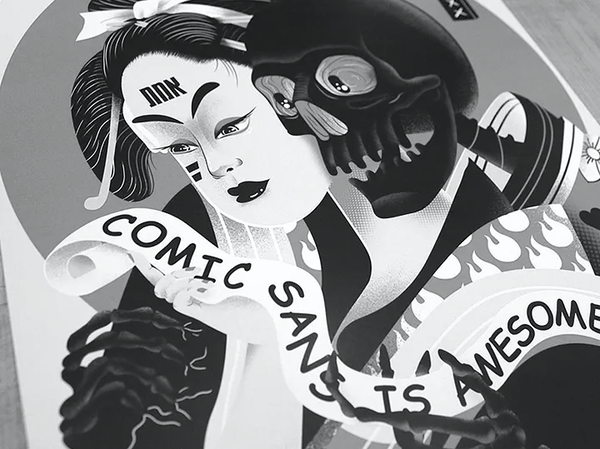
Illustration einer Frau, die ein Banner mit der Aufschrift „Comic Sans is awesome“ hochhält.
© Dribble | Pierre Kleinhouse


"I’m not bad,” Comic Sans would say.
“I’m justused that way."
Jon Robinson

Tips for Making Font Choices

If you‘re a designer unsure about font selection, here‘s the truth: Comic Sans has its place. Want to create something genuinely playful for children? It works. Want to provoke a reaction or make a deliberate statement? Comic Sans delivers. Just know what you‘re doing and be prepared for the responses.


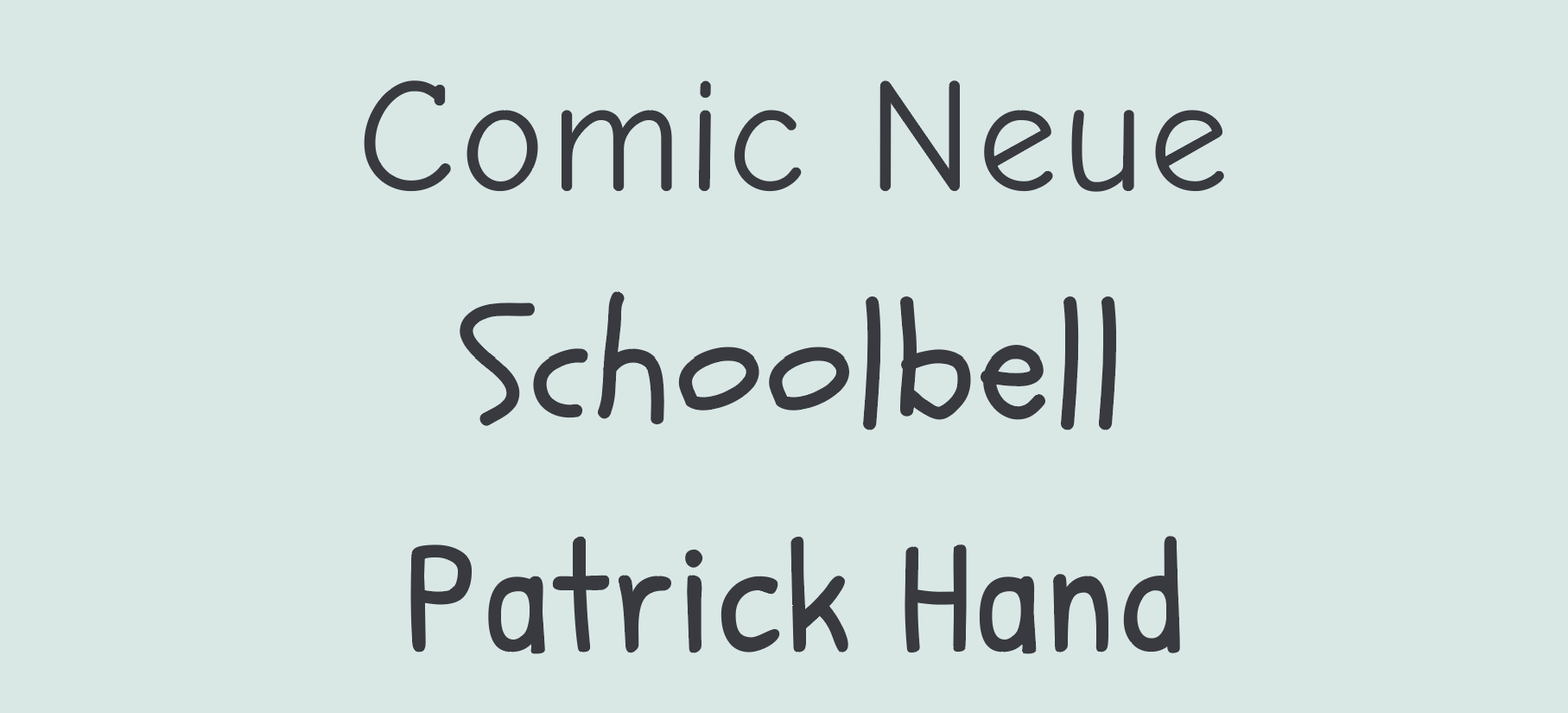
If you love the playful, informal feel of Comic Sans but want alternatives that won‘t trigger design purists, consider these options from Google Fonts: Comic Neue, Schoolbell, or Patrick Hand. Each offers that handwritten, casual vibe without the cultural baggage—and these are just a starting point.


When choosing any font, consider readability, accessibility, and your overall design goals. Test different combinations on various devices. And remember: the best font is the one that serves your audience and message, not your ego.

Alternatives to Comic Sans:

Abbildung der drei Alternativschriftarten "Comic Neue, Schoolbell und Patrick Hand"

So what about you?

How do you feel about Comic Sans now? Do you hate it like stepping into a puddle with socks on? Do you feel sorry for it? Or are you tempted to use it in your next project just to show those uptight designers what rebellion looks like?


Whatever side you‘re on, we can all agree on one thing: Comic Sans is pop culture, whether you want it to be or not. It will be around for a long time, because as long as people hate it, people will talk about it. And Microsoft? They love the fact that you care this much about a font.


After all, indifference is the real death of design. Comic Sans will never die because it will never be ignored. ■

Portrait eines Mannes, welches mit dem Finger in die Kamera zeigt
© Unsplash | Adi Goldstein
Further reading:

“From ASCII Art to Comic Sans Typography and Popular Culture in the Digital Age” by Karin Wagner, 2023; https://doi.org/10.7551/mitpress/14624.003.0001


„I’m Comic Sans, Asshole“ Short imagined Monologue by Mike Lacher, 2010;  https://www.mcsweeneys.net/articles/im-comic-sans-asshole


„Are you kidding? The story of Comic Sans „ Article by Jon Robinson, 2020; https://uxplanet.org/are-you-kidding-the-story-of-comic-sans-f9e00d41eba8


Copyright 2026. All Rights Reserved.
Einstellungen gespeichert
Datenschutzeinstellungen

Hinweis: Dies ist eine Vorlage. Bitte passen Sie den Text an Ihre spezifischen Anforderungen an:
Wir verwenden Cookies und ähnliche Technologien, um Ihre Erfahrung auf unserer Website zu verbessern. Einige Cookies sind für die grundlegende Funktionalität erforderlich, während andere dazu beitragen, die Nutzung zu analysieren und unsere Dienste zu optimieren. Detaillierte Informationen finden Sie in unserer Datenschutzerklärung.

Technisch erforderliche Cookies werden immer geladen.

Hinweis: Bitte passen Sie den Text an Ihre spezifischen Anforderungen an.
Eine Übersicht der verwendeten Theme-Cookies finden Sie in der Dokumentation. Wir empfehlen, diese hier oder in Ihrer Datenschutzerklärung aufzuführen.

You are using an outdated browser. The website may not be displayed correctly.